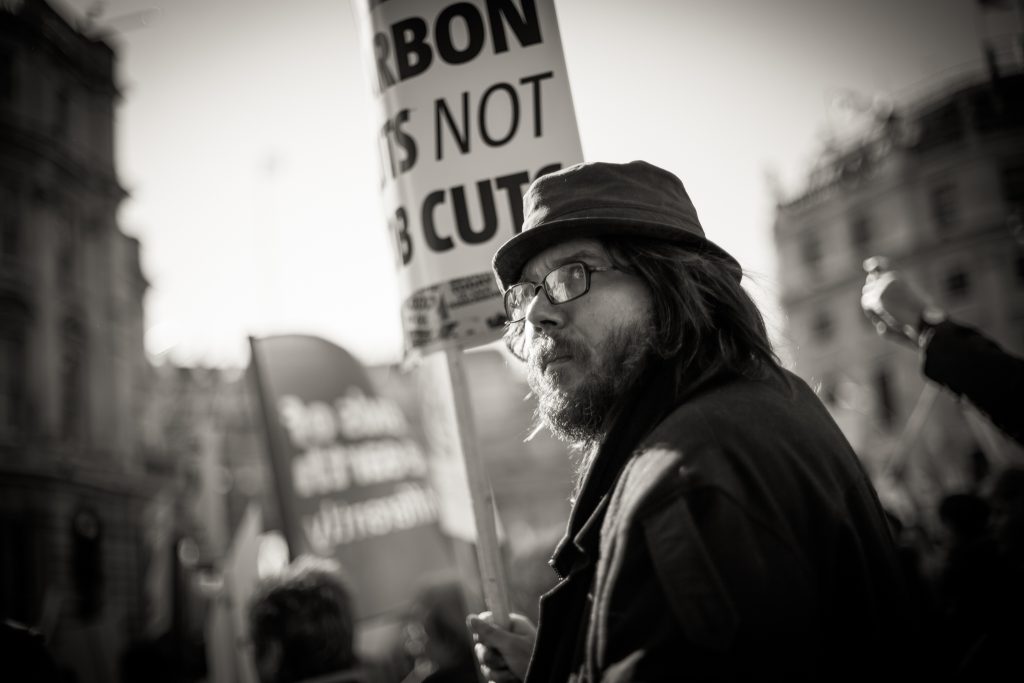
I first moved to London in the autumn of 2010. The Conservative-led government was only a few months old and telling us to expect big cuts in government spending and much less from public services. Trade unions were marching, students were rioting, Occupy London was just around the corner.
So it was an interesting time to arrive in town with a camera. My first viral image was of two Egyptians celebrating the downfall of Hosni Mubarak, and my first image to sell was of the sun rising over a burnt out car in suburban Ealing, the morning after the largest night of the 2011 riots.

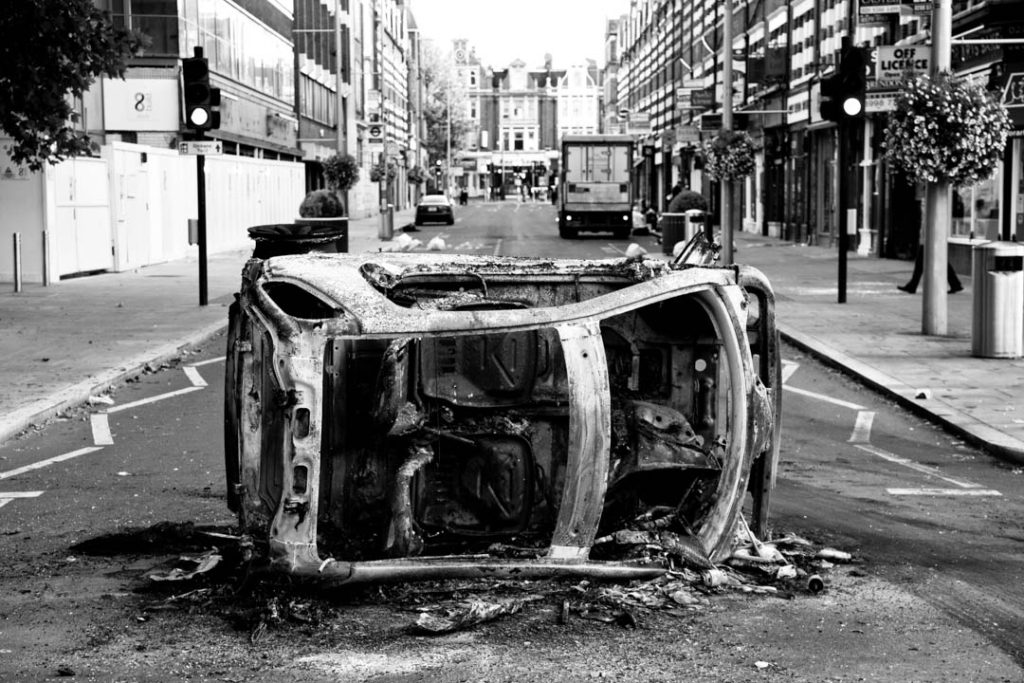
And of course things have hardly calmed down since then.
Protests can be a useful place to gain experience photographing people on the street. Why?
- Large crowds mean it’s easier to find interesting subjects.
- People are expecting to be photographed, making it less nerve-wracking to take shots of strangers.
- Being part of the crowd engaged in a common cause means you’re less likely to experience hostility.
But there’s no doubt the temperature is rising and you need to be more careful at protests than ever before. So, what should you consider if you want to take photographs on the streets at protests?
Stay safe
- Keep your wits about you and don’t spend so much time absorbed by your camera that you forget what’s happening around you.
- A good photo isn’t worth injuring yourself for. If you feel uncomfortable, move.
- Let the press photograph the counter-protest. This is a particular flash point and worth avoiding.
- The police don’t always have the best reputation, but on the whole they’re there to keep things calm and avoid people getting hurt. So listen to their advice.
On the point of safety…
Consider sticking to protests which you generally agree with
Let’s face it, if you agree with the protestors point of view you’re more likely to feel comfortable, blend in and interact with people better. Your photographs will improve as a result.
The Law
In the UK:
- No-one can order you to stop taking photographs of people or events in public. Although our usual warning applies – if someone is acting aggressively towards you then be as polite as you can and move away. This is very rare, but the one time it happened to me I went and stood next to a police officer until the person went away.
- The police can’t ask you to delete photos – although they can take a memory card if they believe it contains evidence of a crime. Make sure you get a written receipt if this happens to you.
How to find out when protests are happening
Again, this mostly applies to London, although similar services will probably exist in other big cities.
- Join mailing lists. If a protest organisation doesn’t have one, you probably don’t want to be at their protests.
- Do a Google. The Greater London Authority, City of Westminster and even the US Embassy all post alerts or news stories when large protests are scheduled.
- Take to X/Twitter. Police organisations will post when protests are expected. In London @metpoliceuk is the main one to follow; @metpolicewestminster is also useful.
And a note about gear
We didn’t want to go into gear and technique too much in this article apart from one point. Don’t take your most expensive stuff. As in all street photography, the smaller the camera and lens the less attention you’re likely to draw to yourself and the closer you’ll be able to get to your subjects.
Want to make money from the photos?
Don’t hold out big hope – stock photography rates are falling all the time. Without gaining a release from everyone in your photos, your images will be classified as editorial, which is less lucrative than commercial work. But, if you get the images online fast there may be some money in it. I’ve been surprised to sell photos of protests years after the event has passed.
I recommend Alamy as the best place to publish your editorial photos, although other photographers will take a different view.
With that advice in mind, if you want to gain some experience shooting on the streets then there are worse ways to start than at a protest. But we can’t stress it enough – stay alert, and stay safe. And don’t forget, if you’d like feedback on your street photos we’d love to see you at our workshop! The booking link is at the bottom of the page.
Marc
All photos on this page (c) Marc Gascoigne